Wednesday, February 20, 2013

Another Survivor of the Tragedy


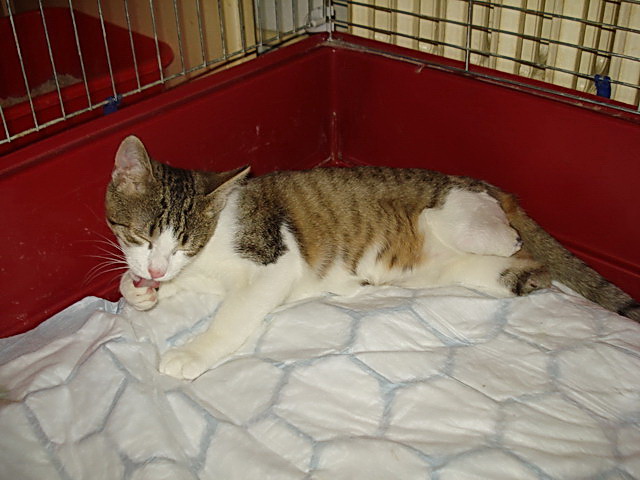
I really don’t know much about Kremko as he must have been seven or eight years old when I first laid eyes on him. He was one of Etela’s cats and had been living at her cat and dog shelter for years, presumably, until it burned to the ground in March 2011.

No one is sure what exactly started the fire, but as the electricity supply at Etela’s shelter had been cut off due to unpaid bills, she was probably using candles and it was suspected that the tragedy struck when a lit candle got knocked
over and the open flame ignited some combustible materials in its vicinity. The major part of the house disappeared in a fierce blaze and Etela herself lost her life together with at least 30 of her cats. Several of the surviving kitties were attacked, killed and
eaten by dogs on the site of the fire later on. None of the dogs died in the blaze.

Etela ran a shelter of about 350 dogs and 60 cats, supposedly, many of which had lived in the house with her and died a horrible death in the fire that ravaged the
the shelter, together with their owner. The shelter itself was quite far from any human settlements, surrounded by fields, in the middle of nowhere. Etela’s dogs must have been barking all through that horrendous, fatal night and the house in flames must have been making loud crackling and popping sounds. Thick smoke would have been rising high into the sky, but sadly no one saw anything, no one heard anything. Not until hours later did anyone know of the horror that all of the shelter tenants
endured that fateful night at the beginning of spring, when unexpectedly and relentlessly, destiny struck a cruel blow.

When everything was over, the surviving animals had remained at what was left of a burned out home for almost a month, all by
themselves. They had been provided with some food, but no one kept an eye on their well-being. Big dogs were attacking the small ones and some of them were attacking the cats, most of which found a safe place on the remains of the roof of the partially burned
house. Whenever any of them were jumping down, compelled by hunger, they were putting their lives at risk. Days were passing by, then days turned into weeks and all of the kitties were still there, on top of that devastated place, desperately struggling to survive sufficiently
long to see another dawn.

After their horrible ordeal, all of the cats that were strong enough, persistent enough and more than anything lucky enough to survive the tragedy, deserved to have the best life possible. Over several
rescue missions, all of them were taken from that place of horror and found their new homes in two separate cat shelters, Jessica and Felix. The first time I went there, I couldn’t take more than five cats as I didn’t have enough carriers, but there was no chance I could
have forgotten about the ones that remained at the fire site, so I finally ended up with 18 of Etela’s cats, all sick and thin, full of worms and fleas and with ear mange; many of them hadn’t been neutered or spayed yet. Kremko was one of the first kitties that
approached me and let me put him in the carrier, so he was one of those first five that reached the safety of my shelter.

Fearful and skinny at the beginning, he made a full recovery rather quickly. He is very quiet and calm, as if he’s somehow
aware that the worst that could happen to an animal is already behind him. He is lovable and cuddly, tolerant and accepting, completely relaxed and seems very happy. I guess his gentle attitude towards the world could have been expected; for anyone
whose survival has been hanging by a thread for so long, every new day must seem like a gift, a celebration of victory of life over death.

The fire at Etela’s shelter was the biggest tragedy that could be imagined and a big sensation at the time, but it seems that everyone has forgotten about it long ago. Most of Etela’s dogs have been rescued by some foreign organizations, as far as I know, but her cats were disregarded even then and much more now. No one seems
to care about how they're doing, no one asks if they need something, as if they disappeared from the scene the minute they were picked up from that horribly damaged shelter. Moreover, the veil of oblivion has covered over all of the precious beings that lost their lives in the
blaze, less than two years ago.

Most of Etela’s cats died with her but even the surviving ones are neither important nor interesting to anyone anymore. I’ll never understand... why cats are always marginalized so unfairly? For me each
and every one of Etela’s kitties is a blessing, a tiny spark of light emerged out of the deepest darkness, a triumph of hope over indifference. In honor to all of those who are no longer with us, their story must be remembered.


Friday, February 15, 2013

Time to Let Go

The hardest and most heartbreaking thing that a pet owner ever has to go through is making the decision to euthanize a dearly loved pet. Euthanasia is a painful and tough subject that raises many difficult moral and ethical questions, but at the end of the day the only thing that really matters is the apparent best interest of the particular animal.

Some, but not many animals die peacefully in their sleep and the owners are spared from having to make the hard decision to
end a life. On the other hand, many pet cats tend to live long past the point where they can sleep, eat or walk normally, just as many of the rescued kitties are too sick or too severely injured to be reasonably expected to make any meaningful improvement.
Everyone wishes that their pets would die quietly and without pain, in their sleep, but we cannot seriously talk about natural death if an animal’s life is being prolonged artificially by medical means.

Sometimes, however painful it may be, the most compassionate
thing to do is to put down a pet whose quality of life is deteriorating rapidly. If a family cat can no longer do the things she once enjoyed, if she is suffering because of old age, chronic or acute illness or a serious injury, if there is more pain than pleasure
in her life, euthanasia is not only warranted, but also a pure final act of mercy.

Over all these years of rescuing and caring for stray cats, I’ve been respecting their right to die in a manner of their own choosing. Some of them were refusing
to be taken to the vet at the end, as if they had decided not to have any more treatment for their terminal illnesses and they all died peacefully at home, in a place they knew and loved. The others just said goodbye when they felt their time had come and walked
away, never to be seen again. Only four of them have had to be put down to end their suffering and I can honestly say that in spite of knowing there wasn’t anything else that could be done, putting down any of them was extremely hard, nevertheless totally
justified.

The decision to euthanize a pet is usually reached only as a last resort, when every possible option has already been tried, exhausted and failed. Are we supposed to wait until a cat is unable to function normally,
until the pain is serious and untreatable, until her suffering becomes extreme, until it’s clear she is facing a horrible, painful death, just because we can’t bring ourselves to lose her? Fighting until the end becomes senseless if it means we’re putting
the pets we allegedly love through unimaginable pain. If we care enough to suffer the heartbreak and say goodbye to set them free of suffering, it is the ultimate, last gift of kindness, it is something called a true love.

Milance, my precious one, was found as a tiny kitten, with his hind legs brutally cut off. He had endured numerous surgeries despite all odds and over time, he grew up into a beautiful, happy tomcat but I’ve always had a vague feeling he would not live long. As he was
growing quickly and getting bigger and heavier day by day, the bone of his left leg kept protruding through the skin every now and then and the bigger he got, the less his stumps could bear his weight, so the wounds started to open up. One day I noticed that his left
stump was swollen, but he wouldn't allow me to touch it. The next night, his loud purring woke me up – he was cuddling with me until morning as if he was saying goodbye and I knew I had held him for the last time. I took him to the vet and it turned out that his
thigh bone was broken longitudinally and he was diagnosed with sepsis. Nothing could have been done except to put him down; otherwise, he would’ve suffered tremendously until death mercifully arrived and I was ready to do whatever it took to spare him
from dying in pain. There was just no other choice.

Marponi was an adult tom when I first met him. After some time he disappeared and was found again two years later, terribly skinny and very sick, unable to stand on his feet and badly
afflicted with calicivirus. His condition had improved a lot over a year of treatment, but then everything took a turn for the worse and his suffering began. His mouth was full of abscesses and proud flesh, he had bad breath and was obviously in pain. The
vet told me he could endure maybe a week in that shape and his death would be a very painful one, he had already been crying for days. Should I have hung onto him and let him suffer, out of pure selfishness? No way.

Nada was picked up as
a tiny kitten, bone skinny and utterly weak, horribly injured by roaming dogs. They literally chewed on her! She had been under treatment for about two weeks and began to recover, but internal injuries were still suspected. And then, suddenly, she began to vomit black
clotted blood and it turned out she had jaundice as well. Seriously injured, skinny and weak as she was, she didn’t stand a chance. Was I supposed to fight until the end, regardless of her suffering? I could not save her, but at least I gave her a peaceful passing.

Dodjos was an adult tom when our paths crossed. Although the other cats didn’t accept him at first, he was persistent and managed to stay with us. Not until we all moved to the shelter was he diagnosed with a very severe FUS. The vets attempted to perform
surgery on him but they didn’t succeed as his bladder was full of some gelatinous, brown mass none of the vets has ever seen before. Had I kept him alive, he would’ve suffered enormously as he had already crossed the point of no return. However difficult it was, I had
to let him go.

The most important consideration for a responsible cat owner must be the well-being of their cat. We are now able to prolong their lives more than ever before, thanks to many advances in veterinary medicine.
We’re providing them with quality food and medical care and we love them dearly, but there may come a time when we have to forget about ourselves and act in their best interest. If our pets are suffering, if the quality of their life is rapidly diminishing, if every new day brings
just more pain, we’re no longer doing right by keeping them alive. The line has to sadly be drawn somewhere.

Wednesday, February 6, 2013

Three Golden Oldies


The sad truth is that pets live much shorter lives than we do and watching them age can be hard and painful, yet inevitable. Years are passing entirely too quickly and in what seems like the blink of an eye, cute kittens turn into adults. The adults in turn grow older and
it’s our obligation and responsibility to help them live their senior years in a serene and dignified manner.

Age-related physical changes that affect elderly cats cannot be corrected but may be mitigated, stress can be minimized and the special needs of older
animals can be met. Aging is usually not experienced as a sudden and dramatic change – in fact, most of the cats are just slowing down after a certain age, gradually and almost imperceptibly. Their bodies are starting to wear out, their senses are becoming less
acute, their vision gets worse, hearing deteriorates , they eat less, sleep more, grow thinner and experience old age in different ways and at their own pace. The early stages of this decline are so subtle as to be virtually unnoticeable but signs of winding down
become obvious at one point, although senior cats can actually have good quality lives, even with the problems of old age, with just a little more care.


Most vets consider cats to be geriatric by the age of 10 to 12
and right now dozens of my kitties fit that category. They are holding on fairly well and although most of them don’t need special treatment, the oldest and the chronic patients appreciate additional considerations for their comfort. Kus Kus, Marka and Kmeca
have been having health problems lately and they need your help.


Kus Kus is in rather bad shape, he is very old and has numerous health issues; he has been diagnosed with stomatitis, pancreatitis, liver and kidney problems and gastritis so far. His gums are inflamed and swollen, and his teeth are in really bad shape. It seems that his entire body, so fragile and so thin, is slowly breaking down on him. He was doing quite well
until last autumn, when he suddenly started losing weight at a rapid rate and the age related effects began to take their toll. Since he's started eating special food and receiving vitamins and supplements, he's gained some weight back and become more cheerful. He is
not suffering and that’s all that matters.

Marka is the oldest cat in the shelter, she’ll turn 18 this spring. She has always been kind of timid and has never gotten along well with the other cats, so she’s spent almost all her life on her own. Her teeth are
deteriorating, causing painful mouth conditions, her appetite is diminished and she’s become very picky. Her digestive system is delicate and less efficient, which results in frequent vomiting. However, she is still beautiful, placid and cuddly, she seems
content and spends most of her time quietly watching the world go by.

My lovely Kmeca, the kitty with vampire fangs and the weirdest meow you’ve ever heard, is sick. She’s been having increasing trouble
urinating recently and the vet's exam revealed she has a feline bladder infection, also known as cystitis. As cystitis is an inflammation of the bladder, she strains to urinate but produces just a few drops of urine or none at all. She has gritty sand in her bladder,
usually referred to as urinary sand, which irritates the lining of the bladder and it's a frequent cause of bladder infections. Luckily, she doesn’t have FUS, at least for now. And that’s not the least of it! She also has chronic bronchitis and has always reacted badly
to changes in the weather. An additional problem she’s been suffering from for years is periodic mammary gland swelling, probably due to some hormonal imbalance and her dental situation is also very bad. She is now being treated with antibiotics and is also
receiving Enysil and Vita Feline, a supplement containing vitamins and natural ingredients. She really hates going to the vet’s and protests without ceasing, as loud as she possibly can, until she cries herself hoarse.

Cats have a much shorter lifespan than humans, although all cat owners would like to think their pets will live forever, but the fact is that they are now living longer lives than they did in the past. They are amazingly capable of adapting to a slower lifestyle and taking
things easy and as long as they are enjoying life, they should be provided with the best of care they so clearly deserve, after years of friendship and unconditional love.

If anyone would like to contribute a little to help with caring for
Felix's senior citizens, it would be highly appreciated!